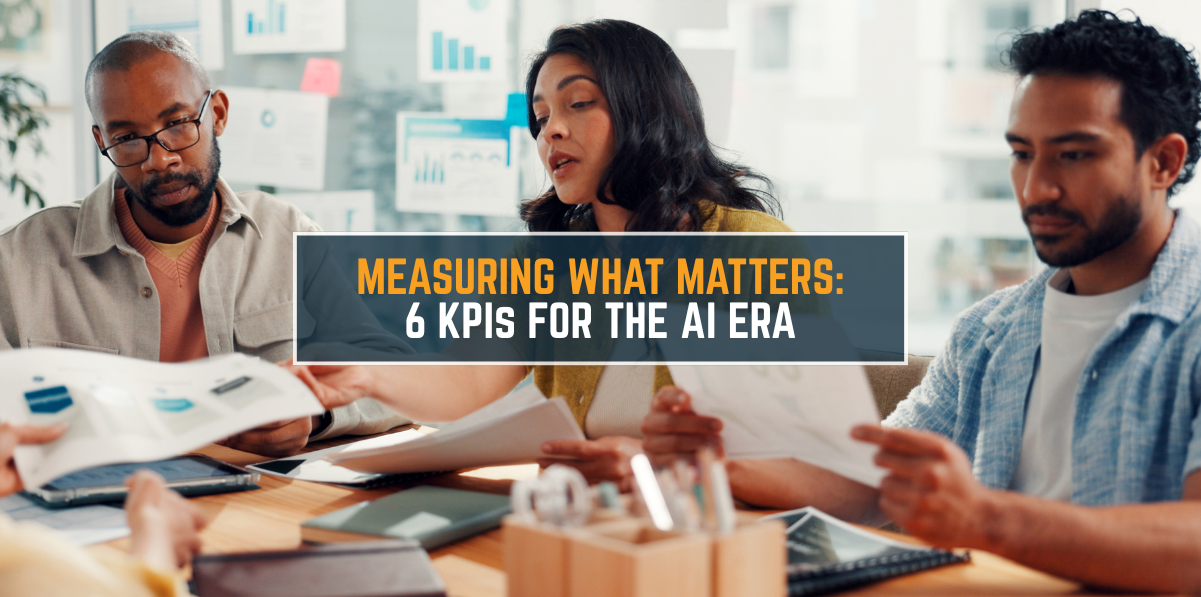
Measuring What Matters: 6 KPIs for the AI Era
AI is changing workplace roles, teams, and work on a weekly basis. Yet our systems for listening remain outdated, scattered, and overly broad. In today's lanscape, a annual staisfaction survey won't cut it. Instead change professionals must redefine employee feedback as a living insight system that guides how organizations shape the employee experience as AI reshapes our workforce in real time.
Our job is no longer just about getting people to accept that change is happening; instead, it’s about helping organizations understand what AI is doing to employees’ work, identities, capabilities, and trust.
The AI adoption challenge: Human barriers
In 2026 AI Adoption in the Enterprise, a report by WRITER and Workplace Intelligence, research shows that "AI adoption has become cultural and structural, not just technical." That means that the real blockers to AI maturity are organizational and behavioral.

Here are a few insights from the study, which surveyed 2,400 executives and employees across nearly 30 industries:
- 79% of organizations are facing adoption challenges and only 29% seeing significant ROI.
- 69% of companies are planning layoffs due to AI, yet 39% don’t have a formal strategy to drive revenue from new AI tools.
- 76% of executives say employee sabotage to AI adoption poses a serious company risk.
- 29% of employees admit to actively sabotaging their organization’s AI strategy.
Why is this happening? Because 75% of executive leaders admit their strategy is “more for show” than intentional ROI. When AI is deployed as a checklist item instead of a human transformation, we see sabotage, security breaches, and a two-tiered workplace of “AI elites” versus employees struggling to use AI at work.
The solution to this very human challenge is to stop treating feedback as one-time event and to reframe it as a continuous-insight system. Change leaders must become the bridge connecting AI strategy to human reality, using feedback to detect where adoption works, where fear is rising, and where AI value is falling through the cracks.
Feedback as an AI lens
Leaders today are data-rich but insight-poor, so our goal shouldn’t be "more data." Instead, we need feedback frameworks that are more specialized and relevant. Rather than treating employee surveys as quarterly, generic sentiment tools, rework them to understand AI across six key areas: sentiment, usage, capability, friction, fairness, and governance.
Leaders need to understand more than generic engagement or satisfaction scores. Instead, OCM can showcase data that provides insights about whether employees trust AI tools, use them, understand them, feel safe using them, and believe that AI benefits are shared fairly. This is important because the 2026 research by WRITER and Workplace Intelligence tells us a class-divide, or two-tiered workplac, is emerging between AI super-users and stragglers. This widening gap includes major differences in productivity, access to promotions, and pay raises.
In fact, “92% percent of participating executives admit they’re actively cultivating a new class of “AI elite” employees.” This class-divide makes employee feedback essential because people will interpret AI strategies and adoption through the lens of fairness, growth opportunities, and job security, not just workplace efficiency.
The new KPIs of a healthy AI transition
AI adoption is not only a technology rollout, it's an experience design challenge. Thus, the six KPIs below help practitioners understand whether the employee experience with AI implementations is becoming clearer, safer, fairer, and more usable as AI is introduced and scaled across an organization.
To make these KPIs useful, practitioners should measure them repeatedly over time, not just once. AI adoption changes as familiarity grows, leadership messages evolve, and tools or policies shift. The deeper idea here is to reframe your pulse checks as a "change radar" that can anticipate areas of AI resistance before they solidify.
Feedback frameworks must be more specific and action-oriented to reveal not just whether people feel positive or negative, but whether they understand the AI, trust intent, and know what to do next. Most importantly, designing better and targeted questions helps leaders lower the risk of AI-elite “polarization.” We’re not just looking for engagement. We’re looking for signals about trust, friction, and even potential sabotage.
1) AI Sentiment
This KPI matters because adoption is emotional before it is behavioral. Sentiment reveals the emotional climate around AI and helps you identify where support needs to be strengthened before resistance hardens.

What it sounds like:
- How do you feel about our organization’s AI direction?
- What is your biggest concern about AI in your role?
- What would make you more optimistic about AI adoption here?
- To what extent do you believe AI will improve your day-to-day work and responsibilities?
2) AI Capability
This KPI matters because people won’t adopt what they don’t understand, and they don’t sustain use when they feel underprepared. Capability is one of the strongest predictors of adoption quality. This KPI helps you identify whether there are gaps is skills, confidence, access, or support. Without capability, an organization may have interest, but not workforce confidence or competence.
What it sounds like:
- How confident are you using AI tools for your role?
- Do you feel you have enough training to use AI safely and well at work?
- What kind of support would help you use AI more often or more successfully?
- Do you know where to go when you need help with AI-related questions?
3) AI Usage
Usage shows whether AI is a part of the way work gets done or simply a side experiment. Many organizations mistake tool launch for meaningful AI use in daily work, but these questions help you pinpoint whether employees are actually using approved AI tools, how often, when, and for what kinds of tasks.

What it sounds like:
- How often do you use approved AI tools in your daily work?
- Which tasks do you currently most use AI for?
- What percentage of your work week involves AI-supported activities?
- Are you using AI tools only when required, or as part of your normal workflow?
4) AI Friction
Friction is how leadership learns what they need to fix across the organization, which is often where the most actionable insight lives. This tells you what is slowing teams down, frustrating them, or what is making AI hard to use in their day-to-day work. This helps leaders prioritize specific training, redesign workflows, improve interfaces, and remove unnecessary complexity from AI efforts.
What it sounds like:
- What gets in the way of using AI in your daily work?
- What feels confusing, slow, or impractical about our current AI tools or guidance?
- Where does AI create more work for you instead of less?
- What would make AI easier to use in your (or your team’s) day-to-day workflows?
5) AI Fairness
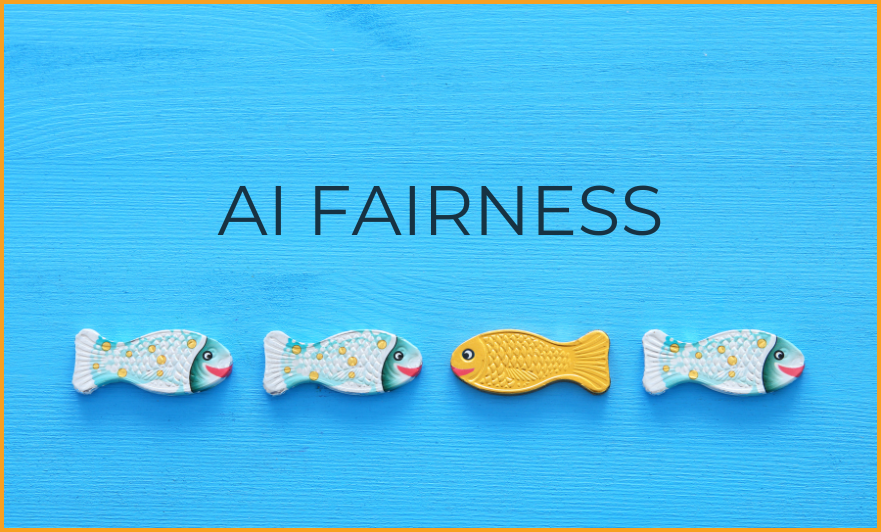
AI adoption can create a “two-tiered workplace” aka divides between those who know how to use AI and those who don’t, between office roles and frontline roles, or between early adopters and late adopters. Trust errodes quickly when employees think AI is creating an unfair workplace. Questions regarding AI fairness help you understand if employees believe AI access, opportunity, support, and rewards are distributed fairly.
What it sounds like:
- Do you believe employees across the organization have fair access to AI tools and training?
- Do you think AI adoption is creating equal opportunities for growth or upward mobility?
- Are some teams or roles benefiting from AI more than others?
- Do you feel the organization is being fair in how it introduces AI-related change?
6) AI Governance
This KPI helps protect your organization while giving employees the clarity to understand what is allowed, what is risky, and how to use AI responsibly. When AI rules are vague, people guess and guesswork can create risk. These types of questions help you see whether AI guidance is clear enough to support safe AI adoption.
What it sounds like:
- Do you understand which AI tools are approved for your work?
- Are you clear on what types of data you can and cannot use in AI tools?
- Do you know what to do if you are unsure whether an AI use case is appropriate?
- How confident are you that your organization’s AI guidance is clear and practical?
Manager: The AI Translation Layer
Trends and data alone won't change behavior. People do. Surveys can tell us what is happening, but managers are best positioned to help us understand why. Managers must be co-owners of AI adoption, not just downstream messengers. Their role is to help teams make sense of AI strategies and what the organization is asking, what is changing, what is safe, and what success looks like for their teams. Managers are the bridge between data-collection and follow-through, and if we want AI adoption to stick, their change leadership skills must be reinforced to:
- Run human-centric check-ins that pair feedback data with human dialogue.
- Close the loop by proving to their teams that feedback creates visible action.
- Advocate for their teams by translating high-level strategy into grassroots reality.
ChangeSync's seminar, Leading Through Change with TRANSFORM, can help you build a workforce of change capable leaders that help bolster culture, confidence, and peer-support during times of significant change.

Seminar participants walk away with a clear understanding of how to:
- Guide teams through the complexities of workplace change with confidence.
- Communicate effectively and build psychological safety for their team.
- Identify change barriers, coach employees, and mitigate resistance.
- Drive commitment through peer-support and employee-led solutions.
By building targeted feedback frameworks and manager change leadership capability, we can make change management a distributed skill set embedded inside the organization. By pairing a continuous-feedback culture with regular leadership check-ins, change practitioners can help organizations can make frequent, low-stakes adjustments to test, measure, and learn about AI adoption and the employee experience in real-time.