The Biggest Lie Change Managers Keep Telling Themselves
“Change is everyone’s responsibility.”
Most change leaders and practitioners say it. It sounds great during town halls. We put it on presentation slides and posters. But upon closer inspection, a different story appears; small project teams and overworked “technical heroes” still carry most of the burden. Everyone else is expected to do business as usual and simply absorb the change later.

Deloitte’s 2026 Global Human Capital Trends study puts numbers to this gap. They partnered with Oxford Economics to survey 3,000 business and HR leaders across a variety of industries in 15 countries. Here’s what they found:
- Only 27% of leaders think their organization manages change effectively
- Just 8% felt they’re highly effective at meeting the workforce’s continuous learning needs
That’s concerning because change isn’t slowing down. In fact, it’s ramping up, with a third of workers saying they have experienced about 15 major changes in the past year.
Top 6 changes experienced by workers in 2026:
- Change in the work itself
- Change in skills required to do the work
- Using AI-related tools to supplement the work
- Tech automation of some or all the work
- New technology systems
- Strategy or business model changes

So, the big lie isn’t that change is everyone’s responsibility. The lie is that our industry continues to rely on small project teams and top down change methodologies that weren’t built for today’s relentless change environment (regardless of AI being in the mix).
The change impact? It’s rough.
When continuous change meets long, top down methods and very few people “in the know,” we see that human well-being, organizational culture, and workplace belonging take a hit.
Deloitte’s research backs this up:
- 68% of workers report decreased well being
- 61% say they have less clarity in their role
- 60% report increased workload
- 58% feel less relevant or left behind
These aren’t just symptoms of a “resistant” workforce, they’re a system-design problem.

Why long, top down change programs can’t keep up
The change management we know today solidified in the 90s when organizations could still treat change as periodic. Since then, a copy-and-paste approach emerged: define the future state, plan a rollout, communicate, train, stabilize, close the project.
The old approach assumed that people impacts could be managed in a mostly linear way and that employees’ main needs were awareness, understanding, and structured training programs. Today’s tech-focused, continuously shifting environment breaks down several of these assumptions.
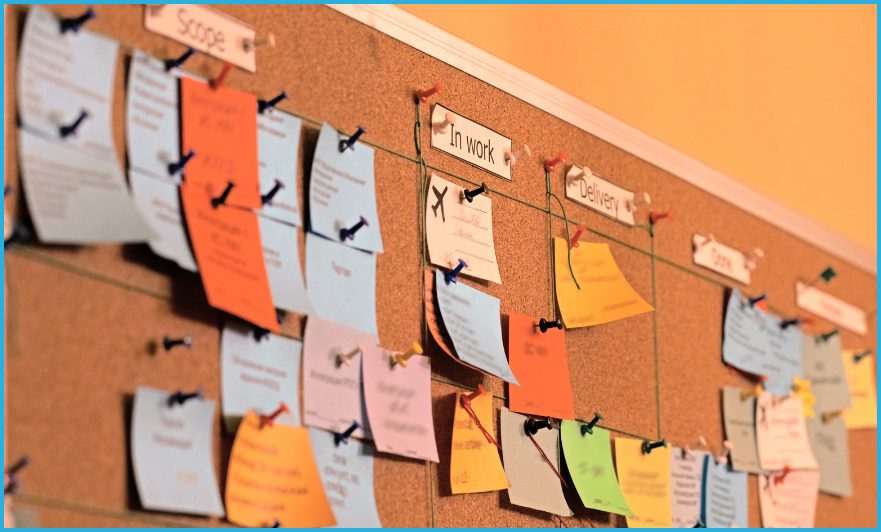
Here's why old change methodologies aren't working:
- Jobs continuously evolve as AI and automation introduce new possibilities
- Many workplaces are in a state of polycrisis, which occurs when multiple crises (aka changes) happen at once and create a web of interconnected challenges
- Institutional knowledge and expertise come from people doing the work, not just centralized project teams
- New tech and AI-tools are emerging faster than governance, role clarity, and training can follow
So, what comes next?
Create “changefulness” and change capability
Deloitte uses the term “changefulness” to describe an emerging need: creating an environment that supports workers’ ability to constantly adapt, experiment, learn, and evolve as part of their job description, not as an “added responsibility” when a project occurs. At ChangeSync, we use a parallel concept: change capability at scale.
Different words, but the same intent:
- Treat adaptiveness, resilience, and experimentation as core parts of every job
- Design work and opportunities to practice new behaviors and skills while people work, not just in training sessions
- Teach leaders across the organization to create environments where staff can safely test, learn, and adjust continuously

That’s the bar. Most traditional change methodologies were never designed to deliver this. That doesn’t mean we discard the models, but it does mean our industry should focus more on outcomes, and less on the method. Instead, use tools that help people spot change earlier, respond smarter, and learn faster.
How ChangeSync helps organizations move beyond the big lie
At ChangeSync, our perspective is straightforward: change really is everyone’s responsibility, but that only works if the organization’s change infrastructure, expectations, and support are redesigned to make the statement achievable.
Your next big AI or technology rollout doesn’t just need adoption plans, it needs grassroots leaders and teams who can rethink and redesign work, roles, and collaboration in real time.
Click here to see how our consulting can help. ChangeSync helps organizations move beyond traditional, top down change management by focusing on four practical shifts:
- Clarify outcomes and expectations: Define what “change capability at scale” means and how it shows up in key roles, leadership behaviors, and team dynamics.
- Redesign workflows and collaboration for AI, not just run pilots: Move beyond proof of concepts by mapping where AI fits into real workflows, what decisions stay human, and how cross functional teams need to operate differently.
- Build “in the workflow” support: Create adaptive digital experiences (think “nudges”) like in system guidance, peer learning, and micro challenges to help people practice outside the training room.
- Create change-capable leaders: Teach managers and people-leaders how to navigate constant change with actionable tools and guides that help them support their teams and build long-term change resilience.

Click here to see how Leading Through Change with TRANSFORM can bring “changefulness” to life for your organization’s leadership. We provide current and emerging leaders with a framework to explore their real change challenges, practice modern leadership approaches, and leave with a clear playbook for how to lead in an environment where AI, new tech, and shifting priorities are the new normal, not the exception.
Ready to move beyond the big lie and build the conditions where “change is everyone’s responsibility” is structurally, and sustainably, true? Visit our consulting and Leading Through Change page or reach out and let’s talk.
Reference: Cantrell, S. et al. (2026). "Staying relevant in a world that won’t sit still." Deloitte, 2026 Global Human Capital Trends.